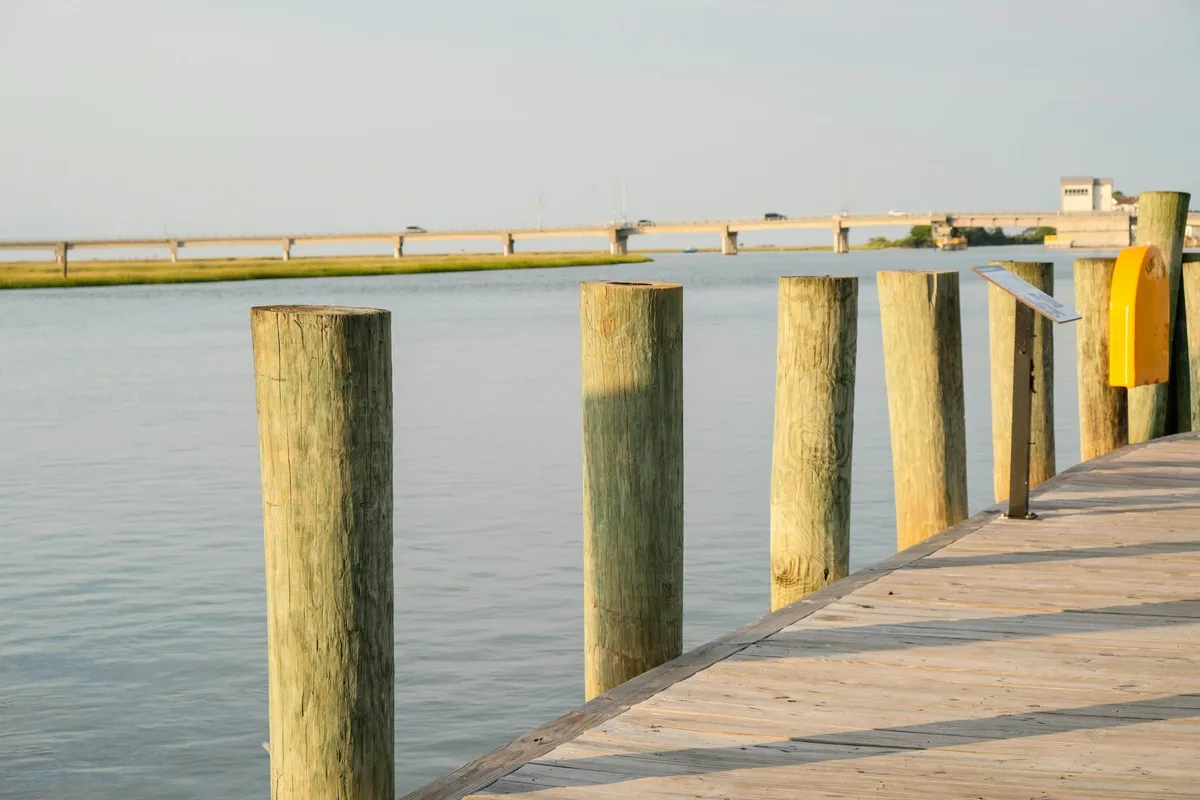
What goes into a new dock
- Walkway. The long run from your yard out over the marsh grass. A private walkway can be up to 4 feet wide, with or without handrails.
- Pierhead. The platform at the end. Fixed, open or covered. How big it can be depends on how wide the creek is.
- Gangway or ramp. Runs from the pierhead down to the float. Often aluminum.
- Floating dock. Goes up and down with the tide. Floating Docks →
- Boat lift. Open-sided, 4-pile or 6-pile, off the side of the pierhead. Boat Lifts →
- Extras. A roof on the pierhead, benches, a storage box, water and power, if the permit allows them.
Marine construction, not just docks
We also take on marsh-side bulkheads, pilings and bigger marine construction jobs around Charleston, SC. Seawalls & Bulkheads → · Commercial Marine Work →
What drives the cost
We don't post prices. The same dock can cost a lot more on one lot than on another a mile down the road. Here's what moves the number:
- Walkway length. It has to reach the first navigable creek. Some walkways here are a few dozen feet. Some run several hundred.
- Height. At least three feet above mean high water means longer pilings.
- Creek width. A wider creek allows a bigger pierhead, and more square footage costs more.
- Fixed or floating. A float means a gangway and flotation on top of the pierhead.
- Boat lift. How big the boat is, how many pilings, and if you want a catwalk.
- Roof and extras. The state looks at roofs case by case, and flat roofs aren't allowed.
- Materials. Wood pilings, what you want for decking, aluminum gangways.
- Bottom conditions. What's down there where the pilings have to go.
- Access. Materials come in over land or by barge.
- Paperwork. Stamped drawings, neighbor notices, a newspaper notice, Army Corps sign-off and HOA review. State fees apply.
Want a real number? Call (854) 205-2740 with your address. We'll talk about the lot before anything else.
Permits come first
Private docks need a critical area permit from SCDES (formerly DHEC-OCRM). The drawings have to be stamped by a South Carolina surveyor, engineer or landscape architect. They won't take hand drawings. And the state puts it on the permit holder if a dock gets built wrong, so if somebody tells you a step can be skipped, don't listen. Dock Permits →
Planning a new dock?
Call (854) 205-2740 or send the form with your address and the creek you're on.